High Yields, High Stakes, and the Quest for Accessible Financing
A Sector Primed for Growth, but Limited Internal Funding Pushes Producers into A High-Interest Loan
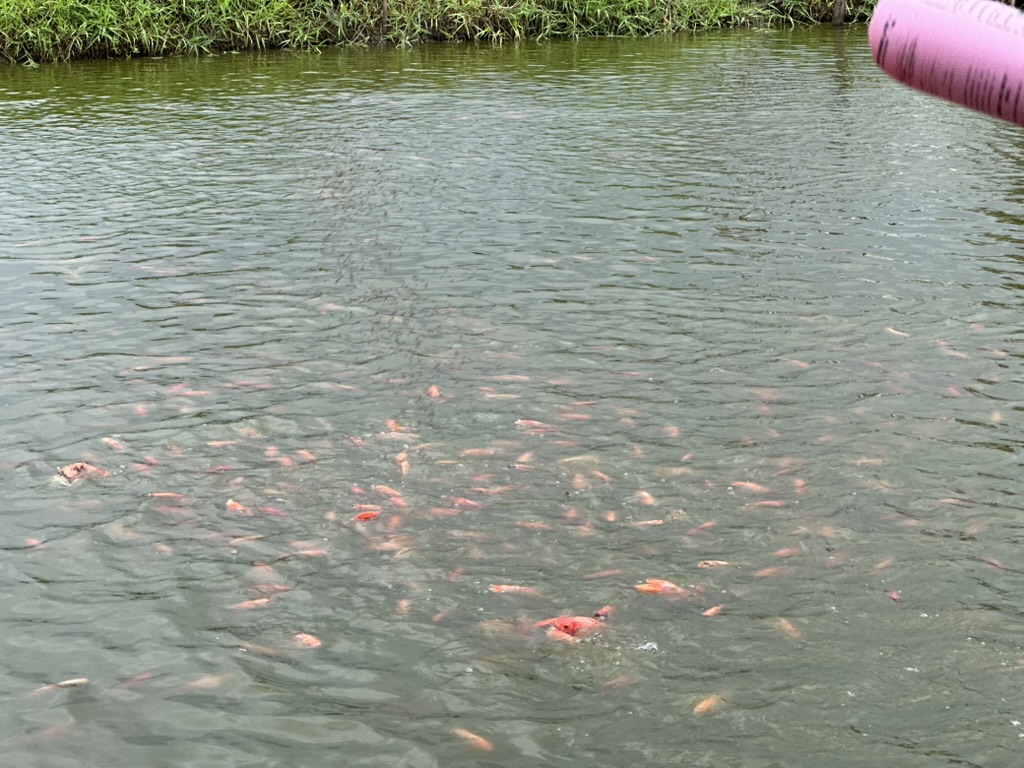
Saline tilapia cultivation in Tunggulsari, Tayu, Pati, is highly economically viable. Under normal conditions, producers see robust profit margins of 20% to 30% per 3.5-month cultivation cycle, with spikes of up to 40% during peak market periods such as the New Year. The sector also acts as a vital socio-economic engine, absorbing local labour for pond maintenance, harvesting, and land improvement.
Despite this potential, the Minah Mulya Abadi cooperative—which coordinates local production and inputs for 22 core members and their broader groups—is severely constrained by a lack of operational capital.
· The Gap: The cooperative currently manages internal capital of approximately Rp160 million
· The Cost: In a single production cycle, the feed requirement for just one farmer can reach 1,500 sacks, costing nearly Rp400 million
· The Consequence: Because internal funds can only cover one or two farmers, most producers are forced into a cycle of high-interest, post-harvest credit with external feed suppliers. This "pay-at-harvest" dependency drains potential profits before they can be reinvested
Why Conventional Banking Fails Small-Scale Producers
To date, formal commercial financing has failed to provide systemic relief for the cooperative, as high interest rates reaching 10% annually—or approximately 0.85% per month—effectively neutralise the thin margins of the saline tilapia business. Internal calculations by the cooperative's management indicate that while a "soft" monthly rate of 0.3% is viable for sustaining profits, any interest exceeding 0.5% risks making the entire cultivation cycle a "zonk," a state where the business yields no actual profit for the farmers.
This financial strain is further exacerbated by steep administrative deductions typical of commercial loans, where an approved Rp100 million loan might result in only Rp90 million being disbursed after various fees and "frozen" funds are deducted. These terms make formal banking far less attractive than direct credit from external feed agents, who do not impose such deductions on the goods provided.
Furthermore, the cooperative faces significant collateral barriers despite a deep commitment to the project; the management has demonstrated a willingness to apply the concept of joint liability (tanggung renteng) and has even collected personal land certificates to back a collective 3 billion rupiah loan application. Despite these efforts to secure institutional backing, they have been met with nearly a year of silence and uncertainty, leaving their growth potential bottlenecked by a lack of accessible capital.
The Path Forward: Targeted Institutional Financing
Unlocking the "Blue Economy" in Tayu requires shifting the debt burden from high-interest external agents to a well-capitalised, cooperative-managed model. By injecting accessible, low-interest capital, the cooperative could centralise bulk feed procurement directly from factories. This would allow them to capture a margin of approximately Rp20,000 per sack, which currently goes to external agents. Such a shift would not only fortify the cooperative’s internal reserves but also significantly lighten the production cost burden for individual farmers, enhancing their long-term resilience against market fluctuations and natural disasters.
Through continued stakeholder engagement and our upcoming “Aquaculture Financing Dialogue” in May 2026, the COAST Facility team remains committed to mapping these initiatives and replicating successful financing models across Indonesia.
These findings were found as part of the site visits and stakeholder engagement efforts supported by COAST Facility Indonesia.
#Aquaculture #COASTProgramme #COASTFacilityIndonesia #Financing #SalineTilapia #Indonesia
